Maverick Protocol
Maverick Protocol Overview: How Dynamic Liquidity Changes AMMs
DeFi’s biggest breakthroughs often come from a simple question: How can we make liquidity work harder? Early AMMs made on-chain swapping possible without order books, but they also spread liquidity so widely that much of it stayed idle. Concentrated liquidity improved capital efficiency, yet it raised the bar for LPs who now had to pick ranges and monitor positions. Dynamic liquidity AMMs aim to keep liquidity useful as the market moves—reducing “dead zones” where liquidity stops earning and improving execution when conditions change. That’s the lens through which many traders and LPs explore Maverick Protocol.
This overview explains what dynamic liquidity means, how it can change AMM behavior, and what you should look for if you’re evaluating Maverick Protocol as a trader, liquidity provider, or builder.
What Is a Dynamic Liquidity AMM?
A standard AMM is built around:
pooled token reserves
an on-chain pricing function
automatic execution of swaps against those reserves
A dynamic liquidity AMM focuses not only on pricing, but also on liquidity distribution over time—how liquidity is positioned and how it can remain relevant as price moves.
A beginner-friendly analogy
Think of liquidity as streetlights along a road:
If lights are spread evenly across a huge highway, many are wasted where nobody drives.
If lights are concentrated only at the busiest intersection, the intersection is safer—but the moment traffic shifts, the lighting becomes inefficient.
Dynamic liquidity tries to keep lighting focused where traffic actually is, even as traffic patterns change.
Maverick Protocol: The Big Idea Behind Dynamic Liquidity
Maverick Protocol is often discussed as part of the advanced AMM landscape because it emphasizes two themes:
intentional liquidity placement (where liquidity sits across prices)
liquidity behavior (how liquidity can respond as price changes)
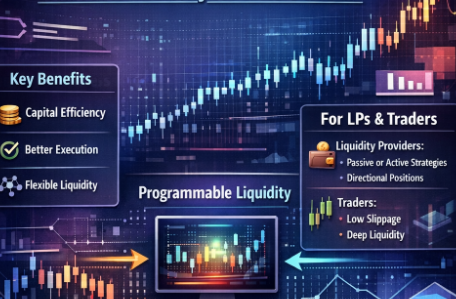
Instead of treating liquidity as purely static inventory, the model highlights strategy-driven configurations—so LPs can aim for higher utilization and traders can benefit from deeper liquidity near the active price.
Why this matters in practice
Dynamic liquidity approaches can help address:
underutilized capital (liquidity sitting far from the price)
sudden drops in usable depth during volatility
the operational burden of constantly repositioning LP ranges
Why Traditional AMMs Leave Capital Idle
To understand the value proposition, it helps to start with the core inefficiency: most AMMs historically made liquidity available across a wide range of prices, which means:
only a fraction is near the current trading price
the rest is effectively dormant until price moves significantly
Common outcomes of idle liquidity
For traders:
higher slippage at meaningful trade sizes
inconsistent execution quality across market regimes
For LPs:
lower fee generation per unit of capital
returns that can lag behind expectations even when volume looks healthy
The “active liquidity” concept
A useful mental shortcut is:
active liquidity is the portion close enough to the current price to actually be used in swaps
inactive liquidity is everything else
Dynamic liquidity models aim to increase the share of capital that stays “active” more often.
How Maverick Protocol Changes Liquidity Behavior
Maverick Protocol is frequently described as dynamic because it centers the idea that liquidity can be deployed with behaviors that attempt to keep it relevant as market price moves.
In the middle of your research, it’s helpful to read the protocol’s own explanation of its mechanics and positioning at Maverick Protocol.
Key elements to understand (without heavy math)
Liquidity distribution
- how liquidity is arranged across prices
Strategy configuration
- the intent behind liquidity placement (more passive vs more active)
Response to price movement
- what happens to liquidity when the market trends upward or downward
Execution impact
- how these choices affect slippage and price impact for traders
What “dynamic” can change for LPs
If liquidity remains closer to the active price:
utilization can rise
fee density can increase
the need for frequent manual adjustments can decrease (depending on strategy)
What “dynamic” can change for traders
If liquidity remains deeper near spot price:
price impact can be lower
execution can be smoother
routes can remain more stable during market shifts
Maverick Protocol vs Concentrated Liquidity: What’s Different?
Concentrated liquidity is already a big leap in capital efficiency, but it can demand active management. Dynamic liquidity concepts often try to address that trade-off.
Concentrated liquidity: main pros and cons
Pros:
strong capital efficiency when in-range
excellent execution when liquidity is managed well
Cons:
positions can become inactive when price trends
active management can be time-consuming
LP outcomes can vary widely based on monitoring discipline
Dynamic liquidity: what it aims to improve
reduce “out-of-range” inactivity
keep more capital near where trades happen
offer strategy options that match different time horizons
This doesn’t mean dynamic liquidity is automatically better; it means it shifts the optimization target toward consistent usability rather than peak efficiency only when perfectly managed.
Who Benefits Most From Dynamic Liquidity AMMs?
Not everyone needs advanced mechanics. But certain users benefit more from models that prioritize liquidity staying active.
Traders who may benefit
frequent swappers who care about execution
traders who swap medium sizes where slippage matters
users trading during volatility who want more reliable depth
Trader checklist:
compare slippage for your typical size
check depth near the current price
avoid high slippage tolerance unless necessary
If you want a solid foundation on how Ethereum and DeFi transactions work at the network level, start here: https://ethereum.org/
LPs who may benefit
LPs seeking higher utilization without constant babysitting
strategists who want liquidity behavior aligned with market regimes
users who measure performance vs holding, not just APR
LP checklist:
pick strategies you can explain simply
track fees and net position value
scale only after understanding behavior in different market conditions
Risks, Security, and EEAT-Style Due Diligence
A responsible overview must be clear: dynamic liquidity does not remove risk. It changes the shape of risk.
Key risk categories
smart contract risk
market risk
- volatility can change outcomes quickly
strategy risk
- “dynamic” still requires understanding the chosen configuration
MEV and execution risk
- slippage settings and pool depth still matter
Practical safety habits
start with small amounts
use conservative slippage tolerance
avoid trading large sizes in thin pools
read protocol documentation and current updates
consider private routing when available
For broader market context on crypto risk cycles, incentives, and adoption narratives, a mainstream business source can be useful: https://www.forbes.com/
How to Evaluate Maverick Protocol Before You Use It
Use a simple framework that matches how professionals assess DeFi tools.
A practical evaluation framework
Mechanism clarity
- Can you explain what your liquidity is designed to do when price moves?
Liquidity quality
- Is depth near spot price consistent?
Incentive alignment
- Are rewards encouraging sustainable liquidity or short-term farming?
Operational usability
- Can you manage the strategy with your available time?
Security posture
- Are audits, monitoring, and disclosures clear and accessible?
Before deploying capital or executing meaningful trades, revisit the official resources at Maverick Protocol in the context of your goals and risk tolerance.
Dynamic liquidity is best understood as a market-structure upgrade: it tries to keep liquidity useful more often, improving execution for traders and utilization for LPs. Maverick Protocol sits in that design space by emphasizing liquidity behavior and strategy-driven deployment. The smartest way to approach it is to stay grounded: understand the mechanics, choose a strategy you can maintain, measure results over time, and treat risk management as part of the strategy—not an afterthought.